
Why System-Agnostic Integration Is the Key to Long-Term Agility in Higher Education
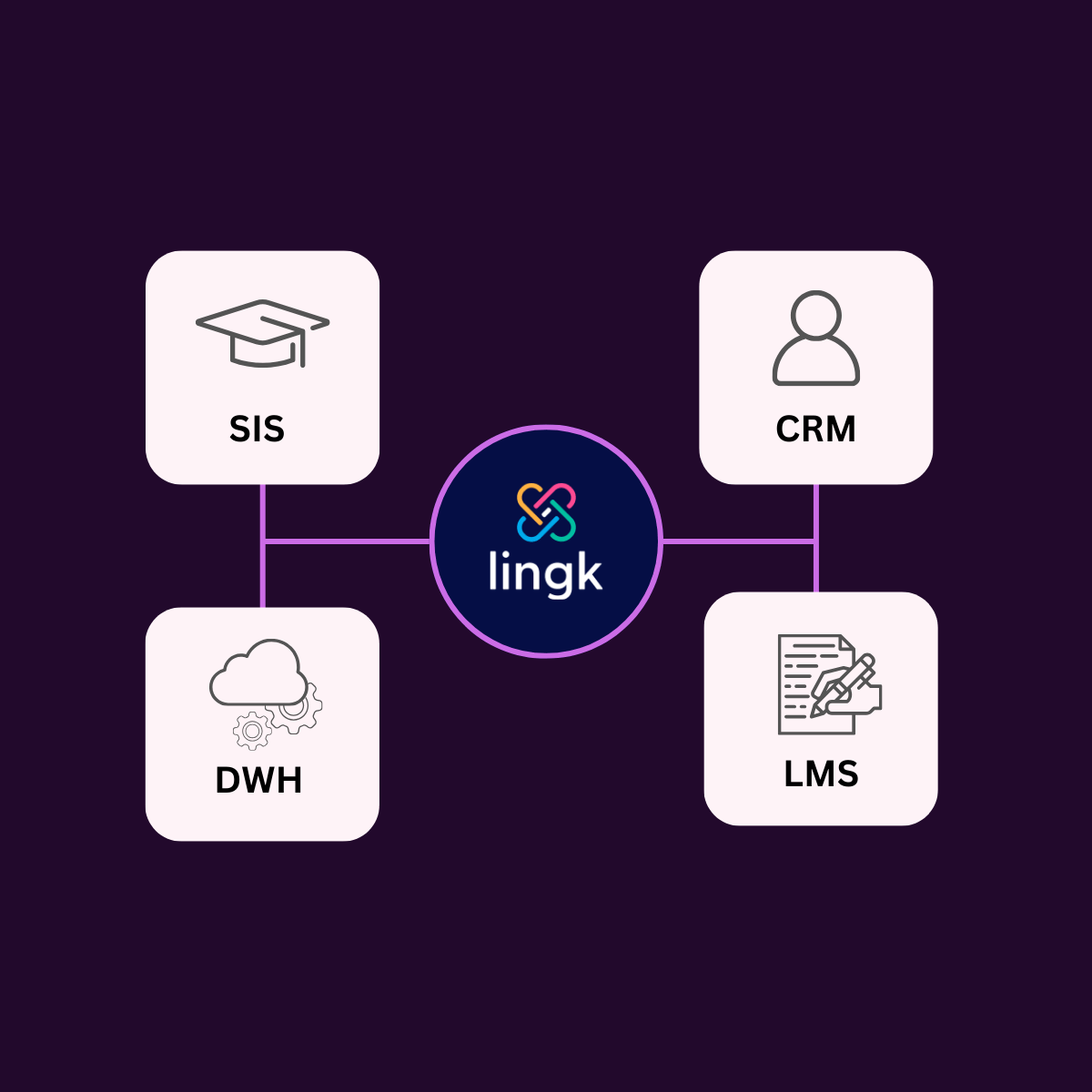
Higher education institutions depend on an evolving mix of enterprise systems. Yet these systems rarely grow in perfect alignment. New strategic priorities emerge, vendors change direction, and innovation cycles continue to accelerate. Institutions that limit themselves to a single vendor ecosystem often find that what felt convenient at first eventually becomes restrictive.
That’s why more institutions today are prioritizing system-agnostic integration strategies. Rather than centering their technology roadmap around one vendor’s suite, they’re designing a flexible data architecture that allows them to adopt the best system for each function—without worrying about belonging to the same ecosystem.
System-agnostic integration breaks down the old assumption that selecting one vendor means you must follow their full product stack. With the right integration partner, institutions gain the freedom to choose the systems that actually fit their needs—even as those needs evolve.
What System-Agnostic Really Means
A system-agnostic approach is not simply “supporting multiple systems.” It means intentionally building an integration layer that:
Works across vendor ecosystems
Adapts to new systems with minimal friction
Reduces dependency on any one platform
Enables future change rather than inhibiting it
A system-agnostic partner embraces the reality that campuses use diverse systems and often need to modernize in phases. Instead of pushing institutions toward a rigid vendor path, the focus is on enabling the use of any system the institution needs.
The Hidden Costs of Vendor Lock-In
Vendor lock-in often creeps in quietly. At first, it may seem easier to use multiple products from the same vendor, especially if they market a “seamless ecosystem.” But over time, lock-in can diminish institutional flexibility in several ways:
1. Limited Choice and Compromised Fit
Institutions may feel pressured to adopt a CRM, LMS, or analytics tool solely because it matches their SIS vendor. This often leads to selecting systems that aren’t the best fit for the institution’s processes, scale, or long-term goals.
2. Slower Innovation
When you’re stuck in a closed ecosystem, you adopt new features and integrations on the vendor’s timeline. If the vendor deprioritizes a key capability—or sunsets a feature—the institution absorbs the impact.
3. Higher Switching Costs
The more tightly coupled you are to a vendor’s ecosystem, the harder it becomes to introduce alternatives or modernize. Migration projects become large, risky, and expensive because so much hinges on custom, brittle, proprietary integrations.
4. Increased Technical Debt
Point-to-point vendor-specific integrations accumulate technical debt over time. Each new system forces the institution further into a corner, making any change feel too costly or too complex.
Avoiding lock-in is not just about preserving choice—it’s about protecting agility and avoiding structural constraints that restrict an institution’s ability to adapt.
How System-Agnostic Integration Enables Long-Term Agility
A system-agnostic integration strategy flips the equation. Instead of the vendor dictating the institution’s roadmap, the institution retains control.
Here’s how this approach strengthens long-term agility:
1. Enables Best-of-Breed Selection
When integrations aren’t a barrier, institutions can confidently choose the systems that best support admissions, student success, advancement, online learning, or analytics—no matter who the vendor is. This ensures technology supports strategy, not the other way around.
2. Future-Proofs Technology Decisions
A system selected today may not be the right fit five years from now. System-agnostic integration ensures that replacing or adding systems doesn’t mean rewriting the entire integration stack. Institutions can evolve gradually and strategically.
3. Supports Incremental Modernization
Many institutions want to modernize step-by-step—CRM first, then LMS, then analytics, or vice versa. A system-agnostic integration platform supports hybrid environments, allowing old and new systems to coexist throughout the transition.
4. Strengthens Data Quality and Data Access
A vendor-agnostic data integration layer eliminates the silos created by fragmented ecosystems. Institutions get accurate, unified data across systems—critical for analytics, AI strategy, and operational efficiency.
5. Reduces Long-Term Costs
When integrations are built for reusability rather than tied to a specific product, institutions avoid paying repeatedly to rebuild similar functionality. They also avoid the premium pricing often associated with proprietary vendor-managed integrations.
Where Lingk Fits Into the System-Agnostic Model
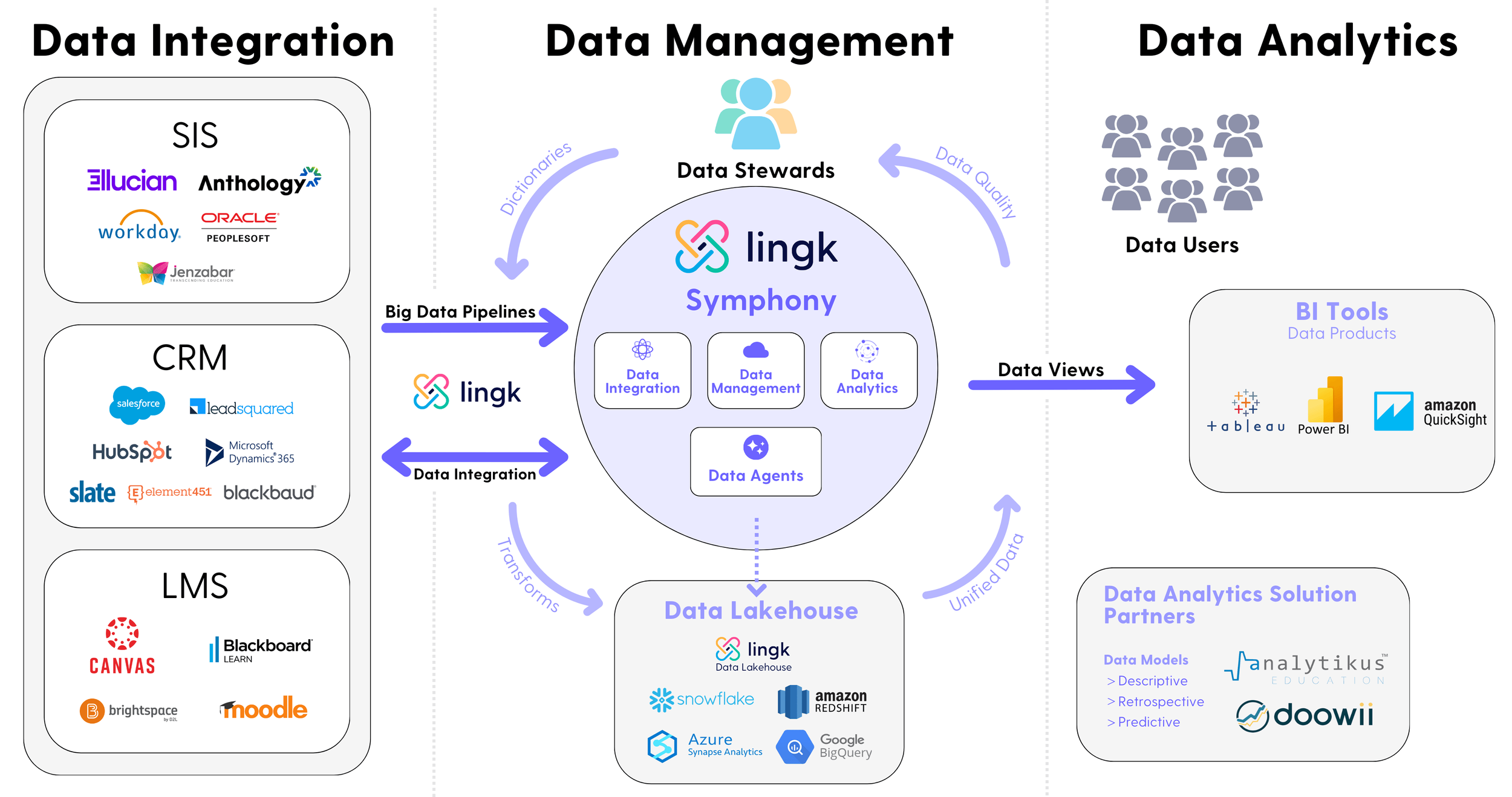
Lingk was built from the ground up to support institutions that use diverse systems. Instead of pushing institutions toward any one vendor ecosystem, Lingk provides a platform and expert-led integration services that integrate across any system: Ellucian, Anthology, Workday, PeopleSoft, Salesforce, Slate, Canvas, Blackboard, AWS, Snowflake, and thousands more.
Lingk’s iPaaS platform, Data Agents, and managed services are designed to eliminate vendor lock-in by giving institutions a reusable, flexible integration foundation—whether they're modernizing legacy flat-file integrations, implementing new cloud systems, or preparing for AI-ready data infrastructure.
Embracing System Freedom Is a Strategic Advantage
In an environment where expectations, enrollment patterns, and technology landscapes are rapidly changing, agility is one of the most valuable assets an institution can have. System-agnostic integration empowers institutions to make decisions based on strategy, not limitations.
By embracing a system-agnostic approach, institutions gain:
More control over their technology roadmap
Freedom to adopt best-fit systems
Better long-term cost efficiency
Stronger data quality and insights
The ability to innovate faster
Vendor lock-in belongs to an earlier era of enterprise software. Today’s leaders are choosing flexibility, interoperability, and future-proof architecture. A system-agnostic integration foundation makes that possible.