How to Plan a Migration From Anthology Student to Ellucian Student
The Current Landscape: What’s Happening with Anthology Student?
The higher education technology market is at an inflection point. Anthology’s Student Information System—born from the merger of Campus Management’s CampusNexus and the broader Anthology product portfolio—has been a foundational platform for hundreds of institutions. But with the recent chapter 11 bankruptcy and Ellucian’s acquisition of the SIS, the institutions that have built their operations around Anthology Student are increasingly asking difficult questions about what comes next.
Several forces are driving this uncertainty. Investment in the platform’s long-term development has been a growing concern. Institutions are watching product roadmaps carefully, and finding that Anthology Student won’t receive any further innovation and support necessary to keep the system evolving for institutional needs over the next 5–10 years. And institutions are beginning to evaluate alternatives.
At the same time, Ellucian has been actively positioning itself as the natural destination for institutions considering a move. Whether the path leads to Colleague, or Banner, the narrative in the market has shifted from “if” to “when.”
The Reality Check
Most institutions aren’t looking to move tomorrow—nor should they be. An SIS migration is a multi-year, multi-million-dollar initiative. The smartest institutions are using this window to modernize their integration architecture now, so that when the time comes to transition, the hardest part of the work is already done.
Understanding Your Options: Colleague, Banner, and Beyond
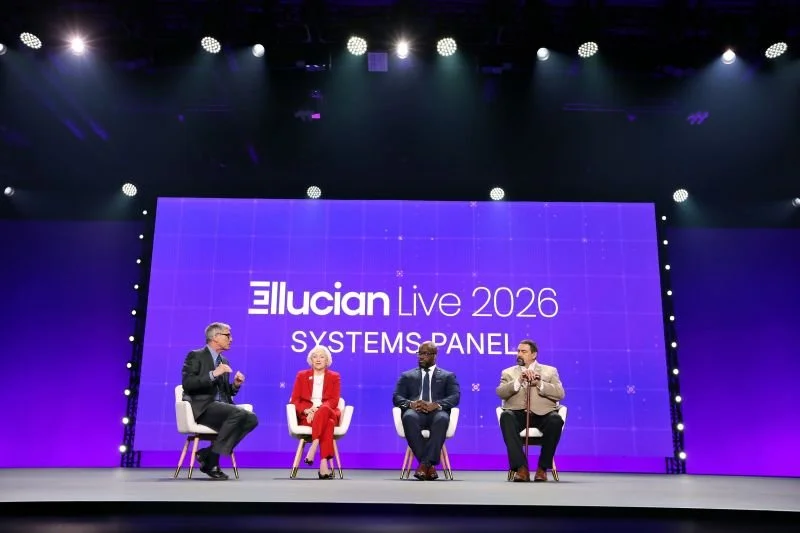
For institutions evaluating other Student Information Systems, the most likely destination is the company that Anthology was bought by: Ellucian. Both Banner and Colleague have a distinct history, architecture, and institutional fit. While the SIS you choose matters, the integration architecture you build around it matters more for long-term agility. An institution with a well-designed integration layer can switch SIS platforms with significantly less disruption than one running dozens of brittle point-to-point integrations.
Colleague
Originally built for small-to-mid-sized institutions, Colleague has evolved into a robust SIS with particularly strong adoption among community colleges and regional universities. Colleague’s SaaS offering has matured significantly, and institutions moving from Anthology Student to Colleague often find the functional footprint familiar. The migration path tends to be less disruptive for smaller institutions with straightforward operational models.
Banner
Banner has historically been the choice of larger, more complex institutions—particularly research universities and state systems. Its depth of functionality in areas like financial aid, HR, and finance makes it a natural fit for institutions with complex regulatory and reporting needs. However, Banner migrations tend to be larger in scope and longer in duration, often requiring more extensive data transformation work.
And Beyond…
While Ellucian dominates the conversation, some institutions are exploring alternatives including Workday Student, Jenzabar, and even modern cloud-native platforms still in early stages. Each comes with its own tradeoffs in maturity, cost, and ecosystem support. Regardless of the destination SIS, the integration challenge remains the same—and in many ways, it’s the most underestimated component of any transition.
What Implementation Consultants Will Likely Tell You
The consulting ecosystem around SIS transitions is well-established. Each firm has methodologies for SIS selection and implementation. Most will tell you the same thing: the migration itself is a 2–4 year process once you factor in selection, planning, data migration, testing, training, and go-live. What they often underemphasize is the integration layer—the dozens (sometimes hundreds) of data connections between your SIS and every other system on campus.
This is where institutions get caught. The SIS implementation consultants focus on the core platform. The integration work often gets treated as an afterthought—something to be handled by internal IT or bolted on at the end. But integration is where the real complexity lives, and it’s where projects stall, budgets inflate, and timelines slip.
What’s Actually Involved in an SIS Migration
| Workstream | What It Involves | Typical Duration |
|---|---|---|
| Discovery & Planning | Current-state assessment, stakeholder alignment, vendor evaluation, RFP process, budget approval | 6–12 months |
| Data Migration | Historical data mapping, cleansing, transformation, validation; student records, financial data, HR data | 6–18 months |
| Core SIS Configuration | Setting up the new SIS to match institutional business processes; registration, grading, financial aid, academic planning | 12–18 months |
| Integration Rebuild | Rebuilding every data connection between SIS and surrounding systems (CRM, LMS, financial aid, reporting, etc.) | 6–24 months |
| Testing & Validation | End-to-end testing, UAT, regression testing, data integrity verification | 3–6 months |
| Training & Change Management | Staff training, documentation, process redesign, communication planning | 6–12 months |
The Integration Iceberg
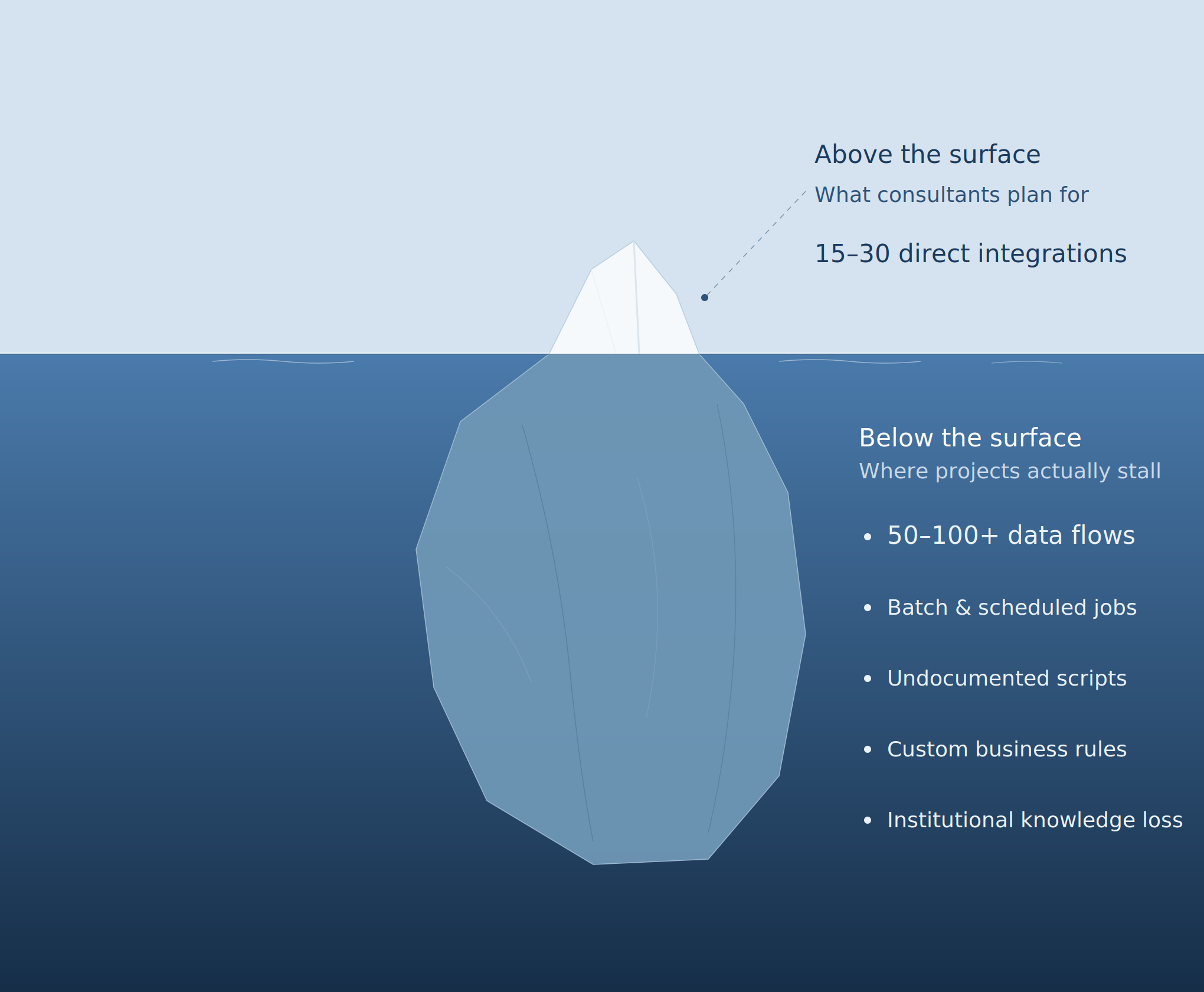
Most institutions underestimate the integration workstream by 2–3x. A typical mid-sized Anthology institution has 15–30 direct system-to-system integrations and 50–100+ data flows once you count batch processes, scheduled jobs, and manual transfers—many of which were never formally documented. When you swap out the SIS, every one of those connections breaks.
Unlike core SIS configuration, which follows a known playbook, integration work is unique to every institution. No two environments share the same combination of custom scripts, data models, business rules, and vendor dependencies. That means there is no template—and it’s compounded by knowledge loss (the people who built those integrations may be long gone), the need to run both systems in parallel during transition, and scope creep as “simple reconnections” reveal undocumented requirements.
This is the iceberg beneath the waterline. And it’s the reason that integration planning should start now so that when a new SIS is adopted the transition can be quicker and easier for IT teams.
The Cost of Waiting
Institutions that defer integration planning until the SIS implementation is underway consistently report 30–50% budget overruns on the integration workstream. Those that modernize their integration layer before selecting a new SIS can often cut integration migration costs in half. The takeaway: integration planning should start now, not when the contract is signed.
Building a Future-Proof Integration Foundation Before Adopting the New SIS
From Point-to-Point to Platform
The goal is to move away from brittle, custom, point-to-point integrations and toward a centralized integration platform (iPaaS) that acts as a hub between your SIS and every other system. Instead of System A talking directly to System B through a custom script, both systems connect through the integration platform which also connects to all other 30, 40, 50, 60+ systems.
This architectural shift has a transformative implication for SIS migrations: when you change your SIS, you only need to update one connection—the connection between the integration platform and the new SIS. Every downstream integration stays intact because it connects to the platform, not to the SIS directly.
A Phased Approach to Modernization & Transition Planning
Assess & Stabilize (Now – 6 months)
Focus on understanding and documenting your current integration landscape while continuing to operate on Anthology Student.
- Complete a full integration inventory and dependency map
- Identify and retire obsolete or redundant integrations
- Address critical stability issues in existing integrations
- Begin evaluating iPaaS platforms as a centralized integration layer
Modernize & Centralize (6 – 18 months)
Migrate integrations from point-to-point connections onto a centralized platform while still running Anthology Student.
- Migrate high-priority integrations to iPaaS (CRM, LMS, financial aid)
- Implement metadata management and data quality standards
- Establish integration monitoring and alerting
- Build institutional knowledge around the new integration architecture
Prepare & Transition (18 – 36 months)
With a modern integration layer in place, execute the SIS transition with dramatically reduced integration risk.
- Support SIS selection and implementation alongside your chosen partner
- Connect the new SIS to your existing integration platform
- Run parallel operations with confidence (both SIS platforms feed through the same integration layer)
- Cutover with minimal downstream disruption
How Lingk Supports SIS Transitions
Lingk was purpose-built for exactly this moment in higher education. We combine an enterprise integration platform (iPaaS) with deep higher education domain expertise and hands-on professional services to help institutions modernize their integration architecture—whether you’re preparing for a future SIS transition or simply trying to get more value from Anthology Student today.
What Sets Lingk Apart
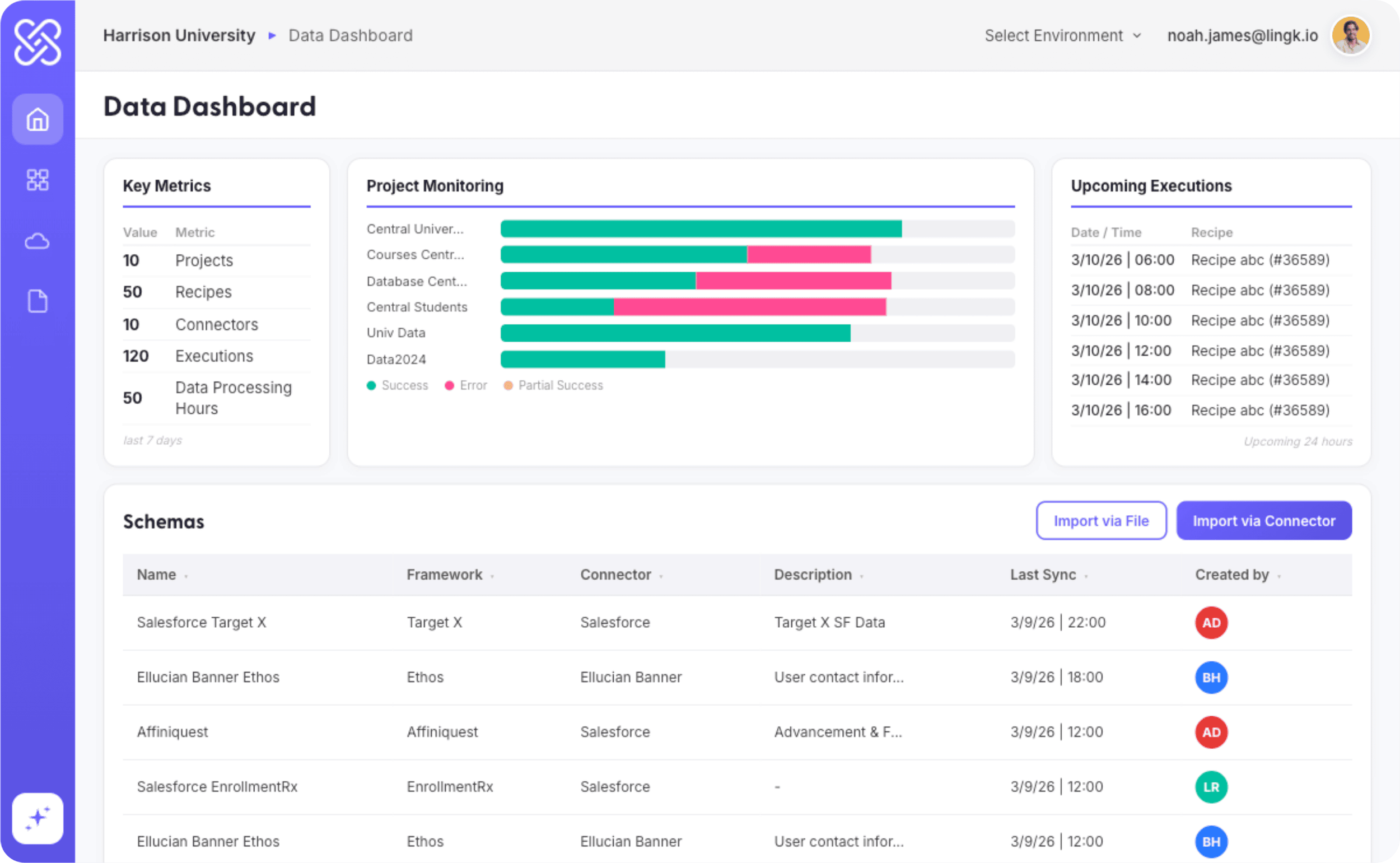
Platform + People + AI: Lingk provides managed integration services along with our enterprise iPaaS powered by the Data Integrator Agent to accelerate integration delivery. Our team of data architects, integration engineers, and project managers work alongside your IT staff—or in place of it, if needed. We become an extension of your team.
Migration-Ready Architecture: Every integration we build on the Lingk platform is designed to be SIS-agnostic at the integration layer. When the time comes to transition from Anthology to Ellucian (or any other SIS), the integrations we’ve built adapt—they don’t need to be rebuilt from scratch.
Higher Education Expertise: Lingk was founded in 2015 specifically to solve integration challenges in higher education. Our platform, our connectors, and our team all understand the nuances of SIS data models—including Anthology Student, Ellucian Colleague, Ellucian Banner, and Workday Student.
About Lingk
Lingk is a services-led technology company that helps higher education institutions modernize their data and enterprise application ecosystems. We partner with CIOs and senior IT leaders to reduce delivery risk, improve operational reliability, and create a stronger foundation for analytics and AI readiness—grounded in real institutional constraints, governance requirements, and stakeholder expectations. Our teams bring deep higher-ed experience and take the time to understand your unique architecture, integration patterns, data flows, and reporting realities before recommending or executing a path forward.
Engagements are flexible by design. Lingk can augment your internal team as hands-on delivery support, or operate as a managed services partner responsible for ongoing execution and operational outcomes. We are system-agnostic and work within your existing tools and environment—avoiding vendor lock-in. Our team brings proven delivery practices across strategic roadmapping advisory, system implementation, data pipelines for analytics, data integration, and data migration. Lingk also offers the Symphony Platform—an enterprise integration platform with AI agents to rapidly develop and manage robust data integrations and data pipelines. The result is practical modernization and AI-readiness for higher ed institutions.